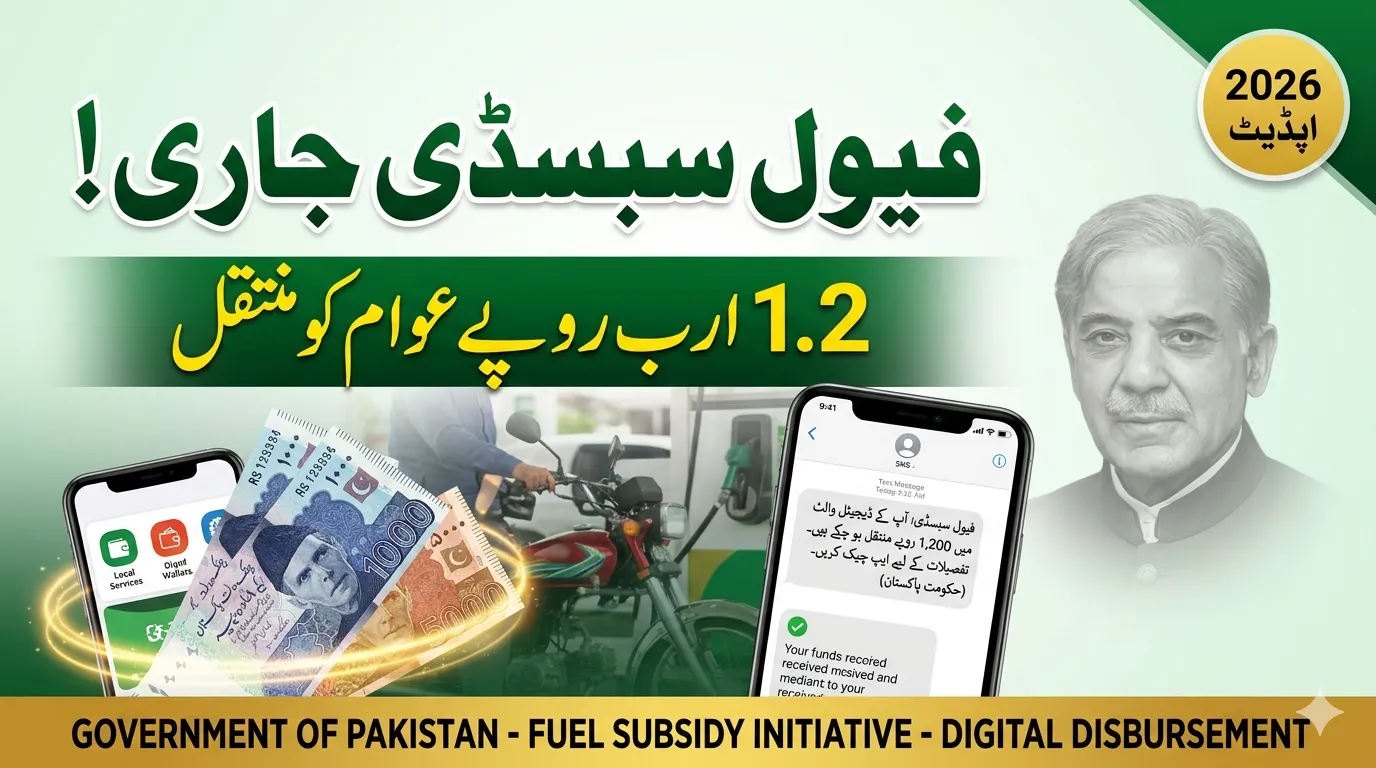
Fuel prices in Pakistan continue to put pressure on daily life, especially for low-income families and commuters. In a major relief step, the government has successfully distributed Rs. 1.2 billion as a fuel subsidy to around 32,000 eligible beneficiaries through secure digital wallets.
This initiative highlights a strong move toward transparent, fast, and corruption-free financial support, ensuring that funds reach deserving people directly without any middlemen.
Major Fuel Subsidy Update 2026
The latest subsidy rollout shows how digital systems are transforming public welfare programs in Pakistan. Instead of traditional cash distribution, the government used modern payment solutions to deliver funds instantly.
Quick Overview
| Category | Details |
|---|---|
| Total Subsidy | Rs. 1.2 Billion |
| Beneficiaries | 32,000 Individuals |
| Payment Method | Digital Wallets |
| Purpose | Fuel Cost Relief |
| Coverage | Nationwide |
What Is the Fuel Subsidy Program?
The fuel subsidy program is designed to support low-income citizens who are struggling due to rising petrol prices. Through this initiative, eligible individuals receive direct financial assistance in their digital wallets, which they can use for fuel expenses or other daily needs.
This system ensures that assistance is delivered fairly and efficiently, without delays or extra costs.
How Digital Wallet Payments Work
The entire process is simple and user-friendly:
- Subsidy amount is transferred directly to the user’s mobile wallet
- Users receive SMS confirmation after payment
- Funds can be used digitally or withdrawn as cash
- No need to visit offices or stand in long queues
This digital method improves speed and reduces chances of fraud.
Benefits of the Digital Payment System
The use of digital wallets has brought several advantages:
- Fast and secure transfers
- No agents or middlemen involved
- Easy access through mobile phones
- Transparent and trackable system
- Supports financial inclusion across Pakistan
This approach is especially helpful for people in remote and rural areas.
Who Benefits the Most?
This subsidy mainly supports people who rely on fuel for their daily income and travel:
- Motorcycle owners
- Delivery riders
- Rickshaw drivers
- Daily wage workers
For these groups, fuel costs take a large portion of income, so this subsidy provides real relief.
Eligibility Criteria
To qualify for the fuel subsidy, applicants must meet the following conditions:
- Must be a Pakistani citizen with a valid CNIC
- Belong to a low-income household
- Have a registered mobile number linked to CNIC
- Own or regularly use a motorcycle or vehicle
- Be registered in the official government subsidy database
Providing accurate information is essential to avoid rejection.
Future Expansion Plans
The government is planning to expand this program further by:
- Increasing the number of beneficiaries
- Adding support for public transport users
- Integrating more digital banking systems
- Improving accessibility for rural populations
These steps will help more people benefit from financial assistance programs in the future.
Important Tips for Beneficiaries
- Always use official government portals for registration
- Do not share your CNIC or OTP with unknown sources
- Check SMS notifications regularly
- Ensure your mobile number is registered on your CNIC
Staying informed will help you receive payments without any issues.
Frequently Asked Questions (FAQs)
How can I check if I received the subsidy?
Check your mobile wallet balance or SMS notifications from your service provider.
Which wallets are supported?
Most major mobile wallets registered with your CNIC are supported.
Can I withdraw the subsidy amount?
Yes, you can withdraw cash or use the amount digitally.
What if I didn’t receive the payment?
Contact the official helpline or verify your registration status.
Will this subsidy continue?
Yes, the government is planning to expand similar relief programs.
Final Thoughts
The distribution of Rs. 1.2 billion fuel subsidy through digital wallets is a strong step toward economic relief and digital transformation in Pakistan. It not only supports vulnerable communities but also builds trust through transparency and efficiency.
As the program grows, more citizens will benefit from this modern and reliable system, helping them manage rising fuel costs with ease.