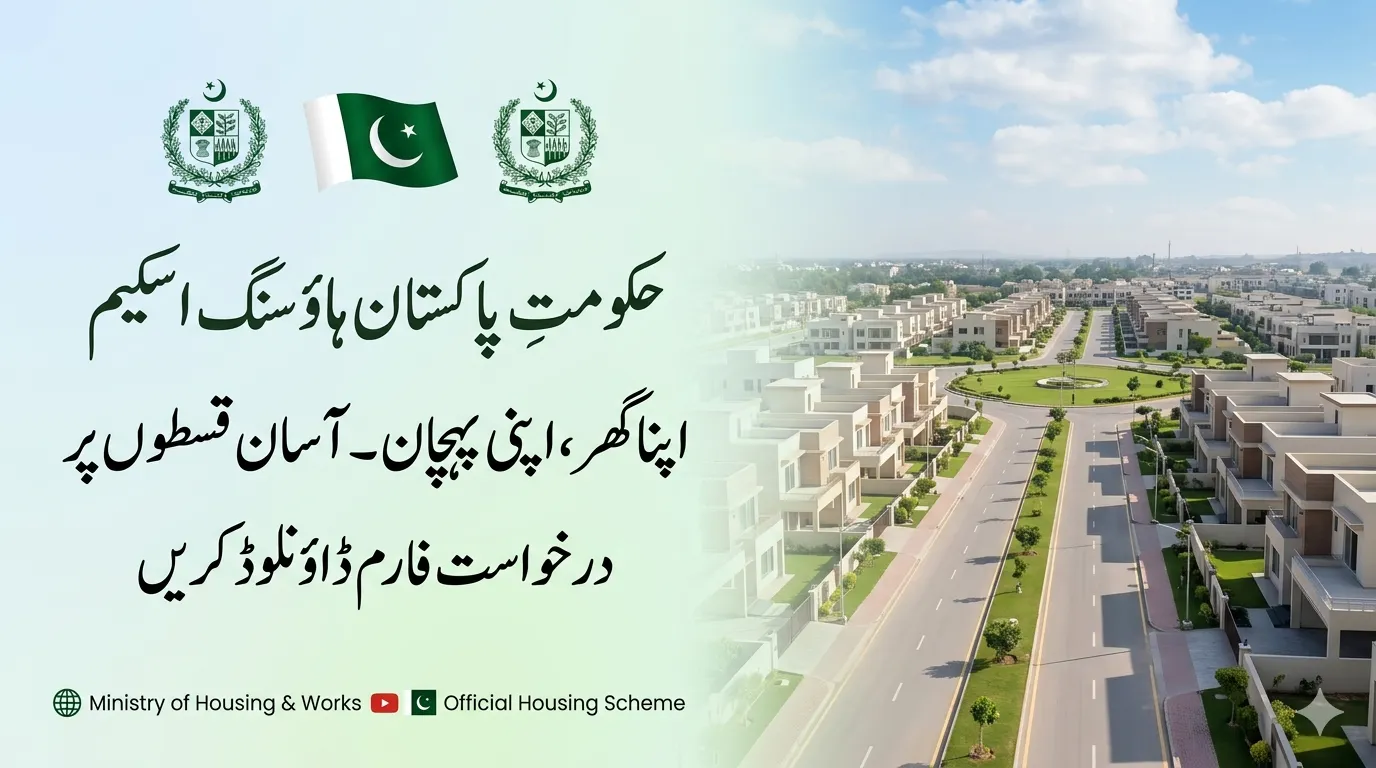
Punjab Government Schemes Apni Chhat Apna Ghar Owning a home has long been a dream for millions of families in Pakistan, especially those living on limited incomes. With rising rents and increasing construction costs, this dream often feels out of reach. However, the Apna Ghar Program 2026, launched by Chief Minister Punjab Maryam Nawaz, is changing that reality. This large-scale housing initiative is designed to provide interest-free loans and affordable housing solutions to low and middle-income families across Punjab. With a target of 100,000 housing units, the program is being recognized as one of the most impactful housing reforms in the province.
Key Highlights of Apni Chhat Apna Ghar Program 2026
- Program Name: Apni Chhat Apna Ghar Program 2026
- Launched By: CM Punjab Maryam Nawaz
- Total Housing Target: 100,000 Units
- Loan Amount: Up to Rs 1.5 Million (Interest-Free)
- Monthly Installment: Rs 14,000 to Rs 26,000
- Repayment Period: 5 to 7 Years
- Official Portal: acag.punjab.gov.pk
- Helpline: 0800 09100
What Is Apni Chhat Apna Ghar Program 2026?
The Apni Chhat Apna Ghar Program 2026 is a flagship initiative by the Punjab government aimed at addressing housing shortages. It focuses on helping eligible families transition from rented homes to safe, secure, and owned housing.
Based on official government data and verified sources, the program includes:
- Construction of 100,000 homes across Punjab
- Provision of interest-free loans up to Rs 1.5 million
- Dedicated quota for low-income households
- Fully digital and transparent application process
This initiative is part of a broader vision to improve social welfare, economic stability, and living standards across the province.
Eligibility Criteria for Applicants
To maintain transparency and fairness, the Punjab government has defined strict eligibility conditions.
Residency and Documentation
- Must be a permanent resident of Punjab
- Valid CNIC issued by NADRA
- Must be the head of the family
- Should have a clean criminal record
Land Ownership Requirements
Eligibility differs for urban and rural applicants:
- Urban applicants: Must own up to 5 Marla plot
- Rural applicants: Allowed up to 10 Marla plot
- Individuals without land can apply for government apartments
- Proof of ownership (Fard/Registry) is mandatory
Financial and Social Criteria
- Preference for applicants registered in National Socio-Economic Registry (NSER)
- Bank defaulters are not eligible
- Must fall under low or middle-income category
Three Execution Models of the Scheme
The program operates under three flexible models to ensure maximum accessibility.
1. Construction on State Land
- Government constructs houses on public land
- Units allocated through transparent balloting
- 5-year easy installment plans
- Minimal down payment
2. Private Housing Partnerships
- 20% quota reserved in private housing schemes
- Government provides Rs 1 million subsidy per unit
- Encourages affordable private housing development
3. Interest-Free Loan Model
This is the most popular and widely used model:
- Loan up to Rs 1.5 million
- Repayment period of 7 years
- 3-month grace period
- Monthly installment starting from Rs 14,000
How to Apply Online – Step-by-Step Guide
The application process is completely digital, ensuring transparency and ease.
- Visit the official portal: acag.punjab.gov.pk
- Click on the Register option
- Enter your name, CNIC, and mobile number
- Log in and fill in family and property details
- Upload required documents (CNIC, land proof)
- Review all information carefully
- Submit your application
Applicants receive confirmation via SMS, and monthly digital balloting is conducted for quick processing.
Latest Updates in 2026
The Punjab government has introduced several improvements to enhance efficiency and inclusivity:
- Joint family members can now apply separately
- Houses are eligible for the CM Solar Program
- Introduction of monthly digital balloting
- Faster verification via centralized digital dashboard
- Integration with Punjab Information Technology Board (PITB)
These updates improve transparency, reduce delays, and ensure fair distribution.
Helpline & Official Contact Information
For accurate information and assistance:
- Official Portal: acag.punjab.gov.pk
- Helpline: 0800 09100
- Punjab Government Website: punjab.gov.pk
Applicants can also visit facilitation centers for in-person support.
Why This Housing Scheme Matters
Housing remains a major challenge in Pakistan, particularly for urban populations. This program plays a crucial role in addressing these issues:
- Reduces housing shortage
- Supports low-income families
- Boosts construction and economic growth
- Promotes legal property ownership
- Enhances financial security and social stability
The initiative aligns with modern governance practices by ensuring digital transparency, accessibility, and fairness.
Conclusion
The Apni Chhat Apna Ghar Program 2026 is a transformative step toward making home ownership achievable for thousands of families in Punjab. With interest-free loans, flexible repayment plans, and a transparent digital system, the scheme offers a realistic path to owning a home.
If you meet the eligibility criteria, applying through the official portal could be your first step toward building a secure future for your family.
FAQs
Who is eligible for Apni Chhat Apna Ghar Program 2026?
Permanent residents of Punjab who meet land ownership, documentation, and income criteria are eligible to apply.
What is the maximum loan amount offered?
Eligible applicants can receive up to Rs 1.5 million as an interest-free loan.
Can joint family members apply separately?
Yes, according to the latest 2026 updates, separate applications are allowed if eligibility requirements are fulfilled.
How can I check my application status?
You can log in to the official portal or contact the helpline 0800 09100 for updates.
Is the loan really interest-free?
Yes, the program offers completely interest-free loans, making it highly accessible for low-income families.
What happens after application submission?
Applications are verified digitally, and selected applicants are chosen through a transparent monthly balloting system.